Tales of Suspense #39 CGC: Iron Man's Debut and What Sets Its Price
Published Oct 10, 2026 · Updated Oct 11, 2026 · 3 min read
Short answerTales of Suspense #39 (March 1963) is the first appearance of Iron Man, and its price depends mostly on the CGC or CBCS grade, then on page quality, label type and the date of the sale you compare against. No single price applies, so check recent sold prices for the exact grade.
What the book is
Tales of Suspense #39, cover-dated March 1963, carries the first appearance of Iron Man. The story was plotted by Stan Lee, scripted by Larry Lieber and drawn by Don Heck, with a cover by Jack Kirby. Tony Stark builds the first armour, a grey suit, to escape captivity in Vietnam.
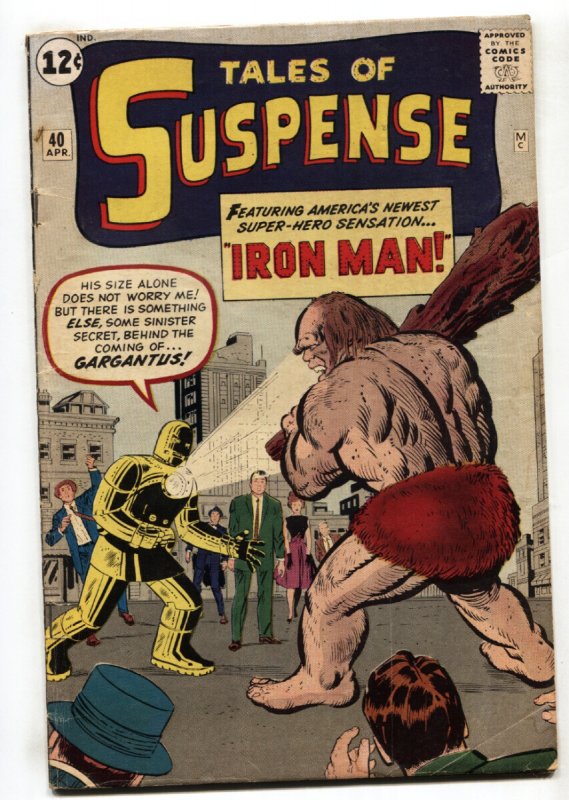
That grey armour is part of what collectors look for in the issue. The suit turned gold in #40 and became the red and gold design in #48 (December 1963), drawn by Steve Ditko. For the full origin and a breakdown of the early issues, see What is the first appearance of Iron Man?.
What CGC and CBCS look for on this book
Both companies grade on a 0.5 to 10.0 scale and seal the book in a tamper-evident holder. On a Silver Age issue like this, graders are checking the same physical points on every copy:
- Spine: stress lines, color-breaking creases and spine splits, which are common on a book of this age.
- Cover: corner wear, edge chipping, creases, staining and loss of gloss.
- Staples: rust, or signs that the book has been opened and re-stapled.
- Restoration: cleaning, colour touch-up, tape or added paper. Restored books are labelled as such, and the label type affects the price.
- Pages: colour and brittleness, covered below.
Small defects move the grade, and each step in grade can change the price noticeably on a key issue. A copy with a spine split will grade well below a visually similar copy without one.
What decides the price
Grade. This comes first. Two copies of the same issue can sell for very different amounts depending on the number on the label. Compare like with like: a CGC 6.5 against other 6.5 sales, a CGC 8.0 against other 8.0 sales.
Page quality. The labels note page colour, such as off-white or white. Whiter pages generally appeal to buyers more, and some will pay more for a copy with better pages at the same numerical grade.
Label type. A standard label means no restoration was detected. A restored label means it was, and those copies usually sell below unrestored books of the same grade. CBCS and CGC are both accepted by buyers, so check which company's holder a comparison sale used.
Timing of the sale. Prices for key Silver Age books move over time. A figure quoted a few years ago may be out of date, and this page does not quote one for that reason.
Where to check recent sales
Look at sold listings, not asking prices. Auction house archives and marketplace sold-item filters show what buyers actually paid. Match the grade, the grading company, the label type and the date. If a sale does not match on all four, treat it as a rough guide only.
For an opinion on a specific copy or a larger collection, the appraisal and valuation service can help.
Graded copies and raw copies
Graded copies of this issue currently listed include a CGC 6.5 and a CGC 8.0.
If you hold an ungraded copy, the decision to grade it depends on its condition. A copy with a split spine, missing pieces or heavy staining may not justify the grading fee, while a clean copy usually does. Grading submission is available if you want the book authenticated and graded, and the full range of slabbed books is in the graded comics store. More collecting guides are in the guides section.
Frequently asked
- Is Tales of Suspense #39 the first appearance of Iron Man?
- Yes. Iron Man and Tony Stark first appeared in Tales of Suspense #39, cover-dated March 1963. The armour in that issue is grey, not red and gold.
- How much is Tales of Suspense #39 worth?
- The price depends on the grade and on when the copy sold, so no single figure is reliable. Compare recent sold prices for the same grade from auction houses and marketplaces, and use the grade as the starting point.
- Does a CGC label improve the value of Tales of Suspense #39?
- A grade and a sealed holder make the condition independently verified and easier to compare, which is how most buyers price this book. The grade assigned, not the holder itself, is what sets the price band.
- Which issue has Iron Man's red and gold armour?
- The armour turned gold in Tales of Suspense #40 and became the familiar red and gold in #48, cover-dated December 1963, in a design by Steve Ditko.
Drafted with AI assistance from the facts and keywords the Rare Comics Collectors team maintains, then put through an automated fact check and our editorial rules. Spotted an error or have a question this guide does not answer? Tell us.