Silver Surfer #1 (1968): What Sets Its Value and How Grade Moves It
Published Oct 10, 2026 · Updated Oct 11, 2026 · 3 min read
Short answerSilver Surfer #1 (August 1968) is the key issue of the 18-issue Marvel run, and its value depends mainly on grade, spine and page condition, and the grading label. Check recent sold prices for the exact grade, because values shift with the market.
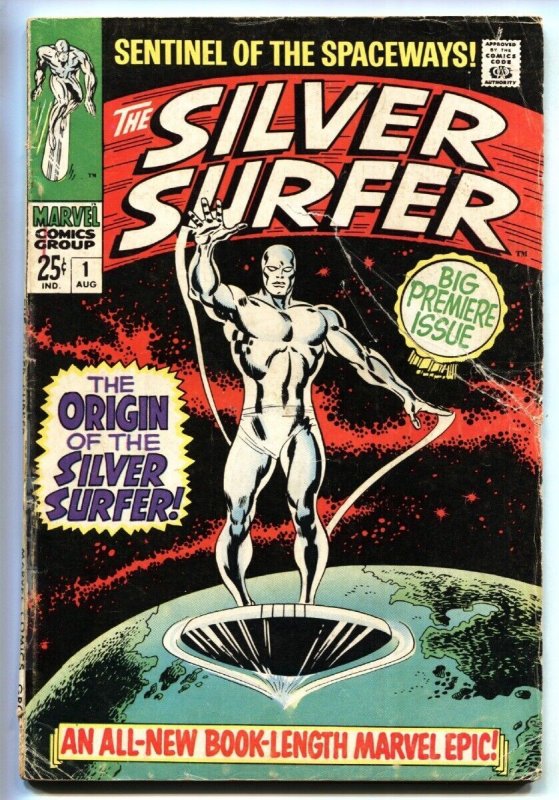
Silver Surfer #1 is the opening issue of Marvel's 1968 solo series for the character, and it is the most sought-after book in the 18-issue run. Its value is driven by condition far more than by any other single factor.
What Silver Surfer #1 is
Cover-dated August 1968, the issue gave the Surfer his own title with art by John Buscema and writing by Stan Lee. It retells his origin and was published as a 25-cent giant-size issue.
It is not his first appearance. That is Fantastic Four #48 (March 1966), covered in the guide to the first appearance of the Silver Surfer. Silver Surfer #1 is the character's first solo book and the start of one of the most collected Silver Age runs, which the collector's guide to the 18-issue run goes through issue by issue.
What decides the price
Four things set what a copy sells for:
- Grade. The numerical grade is the biggest factor. Price steps between grades are uneven: the jump from a mid-grade copy to a high-grade one is far larger than the jump between two neighbouring low grades.
- Spine and page quality. The early issues of this series are square-bound and chip at the spine. Spine stress lines, chipping and small tears are the defects that most often hold a copy back, so a book that looks clean on the front can still grade lower than expected.
- Label type. A CGC or CBCS holder gives a buyer an independent grade, and the two companies' labels are not priced identically in every grade. Compare sold copies under the same label as the one you hold or plan to buy.
- Market demand. Prices for Silver Age Marvel keys move with the wider market and with interest in the character. The Mephisto first appearance in issue #3, for example, saw demand grow sharply in the early 2020s on speculation about screen appearances. See the guide to the first appearance of Mephisto.
Where to check recent sales
Do not rely on a price guide figure alone. Look at recent sold prices from auction houses and marketplaces, filtered to the same grade and the same grading company. Asking prices show what sellers hope for, not what buyers paid.
What CGC and CBCS look for on this book
Both are third-party grading companies that grade on a 0.5 to 10.0 scale and seal the book in a tamper-evident holder. On Silver Surfer #1 the grader's attention falls on:
- Spine condition: chipping, stress lines and any splitting along the square-bound spine
- Corners and edges: wear, creasing and colour breaks on the cover
- Page quality: whether the interior paper is white, off-white or brittle
- Defects such as tears, stains, writing and restoration, which are disclosed on the label
Because small spine defects cost points, a book that appears Near Mint at a glance may come back a notch or two lower. That gap matters, since each step up the scale can change the price noticeably. If you hold an ungraded copy, an appraisal and valuation can tell you whether grading is worth the fee.
Graded copies listed for sale
Copies currently listed in the store span a wide range of grades:
- Silver Surfer #1 CGC 4.0
- Silver Surfer #1 CGC 6.0
- Silver Surfer #1 CGC 6.5
- Silver Surfer #1 CBCS 8.5
- Silver Surfer #1 CGC 9.2
- Silver Surfer #1 CGC 9.8
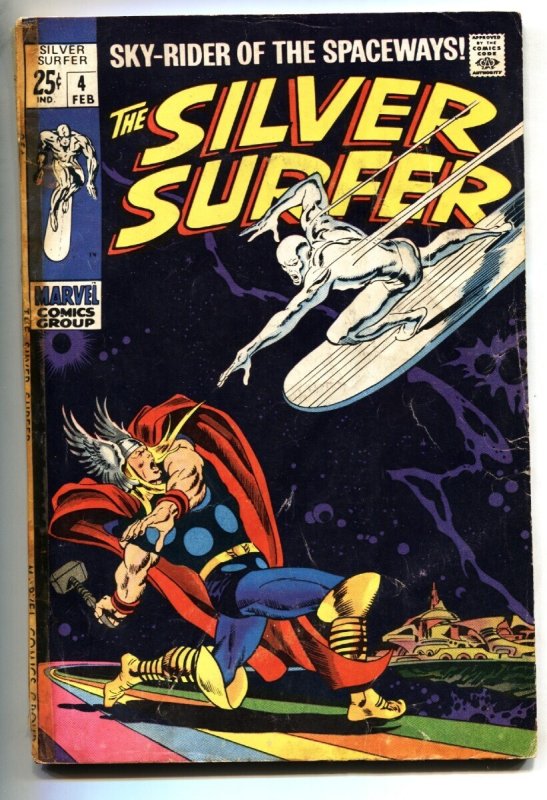
Collectors working through the run often pair the first issue with the other keys, Silver Surfer #3 in CGC 8.0 or CGC 8.5, and Silver Surfer #4 in CGC 8.0. More are on the Silver Surfer character page and in the full graded store.
Frequently asked
- How much is Silver Surfer #1 worth?
- There is no single figure, because the price of a 1968 copy depends heavily on its grade and on current demand. Look up recent sold prices for the exact grade and grading company, since a 4.0 and a 9.2 sit in very different price tiers.
- Is Silver Surfer #1 a first appearance?
- No. The Silver Surfer first appeared in Fantastic Four #48 (March 1966). Silver Surfer #1 (August 1968) is his first solo series issue and retells his origin.
- Why are high-grade copies of Silver Surfer #1 hard to find?
- Early issues of the run are square-bound, and the spine chips easily. That makes clean, high-grade copies harder to find than the cover date alone suggests.
- Should I buy Silver Surfer #1 graded by CGC or CBCS?
- Both use a 0.5 to 10.0 scale and seal the book in a tamper-evident holder. Buyers often compare sold prices for the same grade under each label, so check both before deciding.
Drafted with AI assistance from the facts and keywords the Rare Comics Collectors team maintains, then put through an automated fact check and our editorial rules. Spotted an error or have a question this guide does not answer? Tell us.