Rare & Key Issues

Silver Surfer (1968): a collector's guide to the 18-issue run

Published Sep 14, 2026 · Updated Oct 11, 2026 · 1 min read

Short answerSilver Surfer #1–18 (August 1968 – September 1970) is one of the most collected Silver Age runs: every issue is written by Stan Lee, the first seventeen are drawn by John Buscema and the last by Jack Kirby, and the run is short enough to complete. The keys are #1 (origin, 25-cent giant), #3 (first Mephisto) and #4 (Thor cover, the scarcest issue). Early issues are square-bound and chip at the spine, which makes high grades hard.

The run at a glance

IssuesFormatNotes
#1–725-cent, square-bound, 39-page lead stories with backupsOrigin in #1; Mephisto in #3; Thor in #4; Frankenstein's monster in #7
#8–18Regular 15-cent formatMephisto returns #8–9; Spider-Man #14; the Inhumans #18

The keys

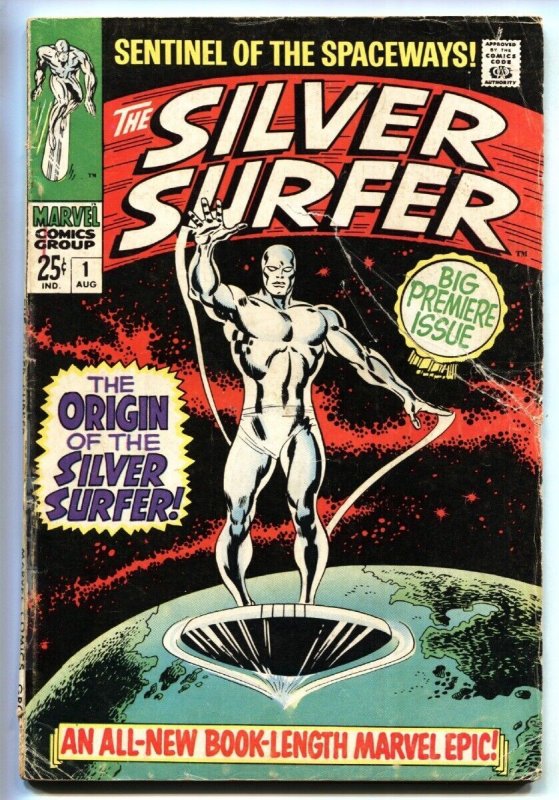
  • #1 (August 1968) — origin of Norrin Radd and Zenn-La; a Watcher backup. The most valuable issue in high grade and a Silver Age key in its own right.
  • #3 (December 1968) — first appearance of Mephisto. Second most valuable.
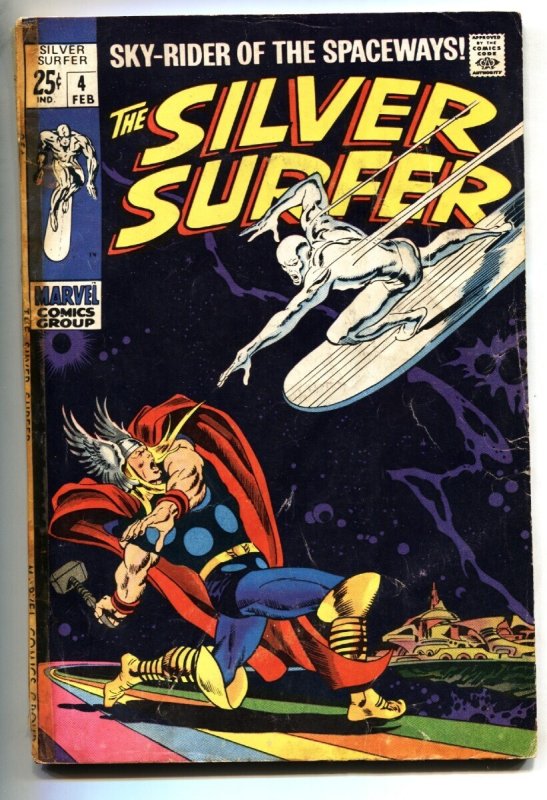
  • #4 (February 1969) — Thor vs the Surfer, with a famous Buscema cover. Widely regarded as the scarcest issue of the run, which is why a 9.0 or better commands a premium out of proportion to its story.
  • #18 (September 1970) — the last issue, drawn by Kirby, with the Surfer's furious "never again" ending.

Condition notes

The square-bound giants (#1–7) have glued spines that split and chip; look for spine stress, chipping at the spine ends and a loose cover. The 15-cent issues grade more normally. Page quality on this run is often off-white; white pages are a premium.

In the store

#1 CGC 6.5, #1 CGC 6.0, #1 CBCS 8.5 with verified signature, #3 CGC 8.0, #3 CGC 8.5, #4 CGC 8.0. See First appearance of the Silver Surfer, First appearance of Mephisto and the Silver Surfer character page.

Written by the Rare Comics Collectors grading team. Spotted an error or have a question this guide does not answer? Tell us.
In the vault right now

Browse all listings →
Silver Surfer #1 (Marvel Comics, 1968), raw, ungraded comic book — front cover
MarvelRaw

Silver Surfer

#1 · 1968

Not graded
Last copy

Marvel Comics · Silver Age

Silver Surfer #1

Raw · Not graded

(0)
$562.50
Silver Surfer #4 (Marvel Comics, 1968), raw, ungraded comic book — front cover
MarvelRaw

Silver Surfer

#4 · 1968

Not graded
Last copy

Marvel Comics · Silver Age

Silver Surfer #4

Raw · Not graded

(0)
$843.75
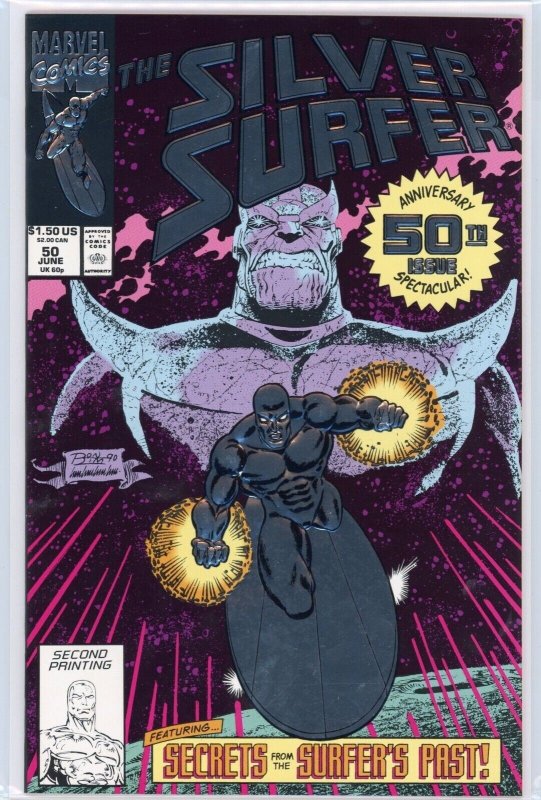
Silver Surfer #50 (Marvel Comics, 1991), raw comic book in NM 9.4 condition — front cover
MarvelRaw

Silver Surfer

#50 · 1991

9.4
Last copy

Marvel Comics · Copper Age

Silver Surfer #50

Raw · NM 9.4

(0)
$9.35
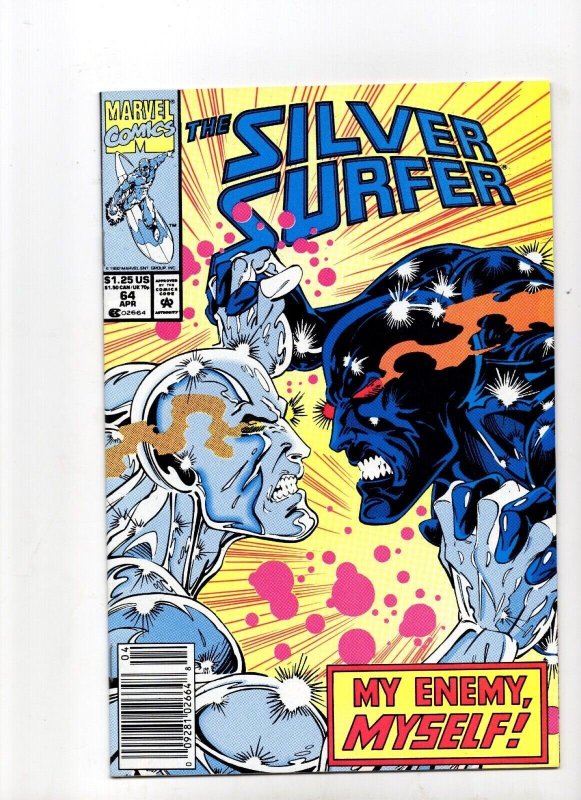
Silver Surfer #64 (Marvel Comics, 1992), raw comic book in FN/VF 7.0 condition — front cover
MarvelRaw

Silver Surfer

#64 · 1992

7.0
Last copy

Marvel Comics · Modern Age

Silver Surfer #64

Raw · FN/VF 7.0

(0)
$13.81
  • Values

    Silver Surfer #1 (1968): What Sets Its Value and How Grade Moves It

    Silver Surfer #1 (August 1968) is the key issue of the 18-issue Marvel run, and its value depends mainly on grade, spine and page condition, and the grading label. Check recent sold prices for the exact grade, because values shift with the market.

    Updated Oct 11, 2026

  • Collecting

    What are the ages of comic books? Golden, Silver, Bronze, Copper and Modern explained

    Collectors divide American comics into eras: the Golden Age (1938 to the mid-1950s), the Silver Age (1956 to about 1970), the Bronze Age (about 1970 to 1985), the Copper Age (about 1985 to 1991) and the Modern Age (1991 to today). The boundaries are conventions rather than official dates, but each era has its own print runs, survival rates, paper and pricing, which is why listings and price guides always state one.

    Updated Oct 11, 2026

  • News

    The most expensive comic books ever sold: documented record sales

    The record for a single comic is 6 million dollars, paid for a CGC 8.5 copy of Action Comics #1 (1938) at Heritage Auctions in April 2024. Other documented milestone sales include a CGC 7.0 Superman #1 at 5.3 million dollars (private sale, 2022), a CGC 9.6 Amazing Fantasy #15 at 3.6 million dollars (Heritage, September 2021), a CGC 8.5 Action Comics #1 at 3.25 million dollars (ComicConnect, April 2021) and a CGC 9.4 Captain America Comics #1 at 3.12 million dollars (Heritage, April 2022).

    Updated Oct 11, 2026

  • Characters

    What is the first appearance of the Fantastic Four?

    The Fantastic Four first appeared in Fantastic Four #1, cover-dated November 1961, created by Stan Lee and Jack Kirby for Marvel Comics. The issue introduced Reed Richards, Sue Storm, Johnny Storm and Ben Grimm, told their origin, and introduced the Mole Man as their first villain. It is regarded as the start of the “Marvel Age” of comics and is Marvel's most important Silver Age key after Amazing Fantasy #15.

    Updated Oct 11, 2026

  • Characters

    What is the first appearance of the Hulk?

    The Hulk first appeared in The Incredible Hulk #1, cover-dated May 1962, created by Stan Lee and Jack Kirby. In this first issue the Hulk is grey, not green — the colour was changed from issue #2 because the grey printed inconsistently. The issue also introduces Bruce Banner, Rick Jones, General Thaddeus “Thunderbolt” Ross and Betty Ross. The original series was cancelled after six issues.

    Updated Oct 10, 2026