Infinity Gauntlet Key Issues and What CGC Grading Means for Them
Published Oct 10, 2026 · Updated Oct 10, 2026 · 3 min read
Short answerInfinity Gauntlet is a six-issue Marvel series from 1991 by Jim Starlin, George Perez and Ron Lim, and the first and last issues draw the most collector attention. CGC and CBCS grade copies on a 0.5 to 10.0 scale, and the grade you can verify is the single biggest factor in what a copy sells for.
What Infinity Gauntlet is
Infinity Gauntlet is a six-issue Marvel limited series from 1991, written by Jim Starlin with art by George Perez and Ron Lim. It centres on Thanos gathering the Infinity Gems and using the Gauntlet to alter reality, and it set up the larger Marvel events that followed. It is one of the best-known Thanos stories in print, and demand for it has been tied to how prominent the character is across Marvel media.
Which issues collectors look for
Collectors tend to want the whole six-issue run, so every issue has a baseline of demand. Beyond that, attention concentrates on two points:
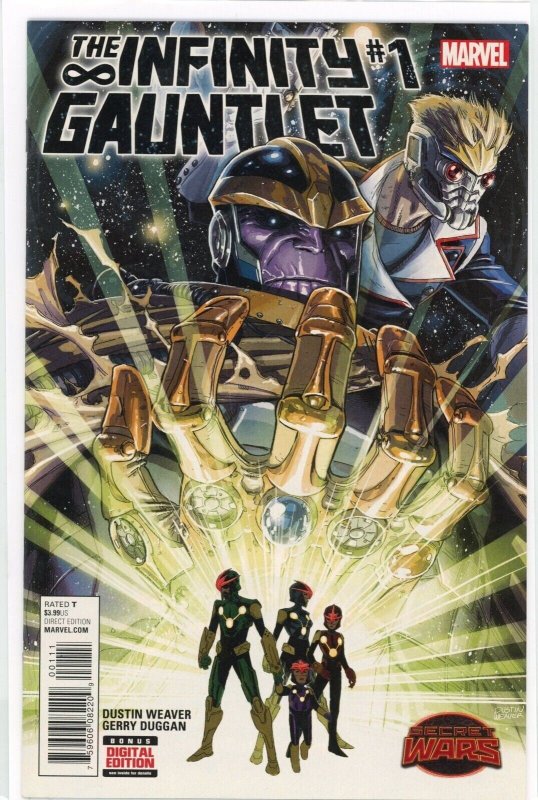
- Issue #1, because it is where the story starts and where many collectors begin a set.
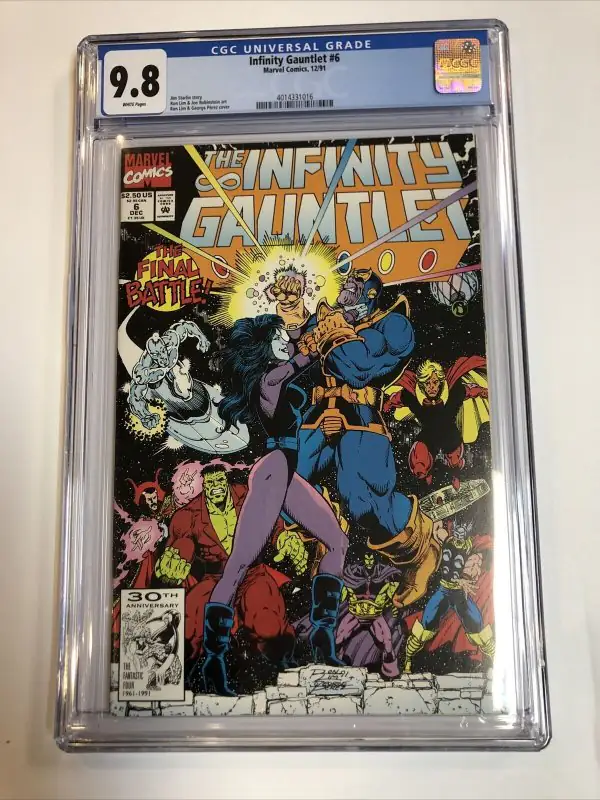
- Issue #6, because it is the finale. A graded Infinity Gauntlet #6 at CGC 9.8 is listed for sale in the shop.
Treat any claim about which issue is scarcest with caution unless it comes with a source. Print run figures for these issues should be checked against a reliable reference before you rely on them.
Thanos also appears in earlier Marvel books, and some collectors work backward from the Gauntlet to related titles.
What CGC and CBCS look for on this book
CGC and CBCS are third-party grading companies. Both grade on a 0.5 to 10.0 scale and seal the book in a tamper-evident holder. For a book from 1991, a few things matter most:
- Cover gloss and colour. The Gauntlet series carries bold, saturated covers. Scuffs, colour breaks along the spine and fingerprints on the gloss show up quickly and cost points.
- Spine. Stress lines and ticks are the most common reason a high-looking copy grades lower than expected. Look at the spine under strong light before you submit.
- Corners and edges. Soft or bent corners and edge wear count, especially on a series that was widely read and handled.
- Page quality. Inside pages from this era are generally in good condition, but check for tanning, stains or loose staples.
- Defects that limit the grade. Tears, creases that break colour, writing, water damage or missing pieces will cap a copy well below the top of the scale.
If you are unsure whether a book is worth the grading fee, a grading submission service can review the copy first. For a broader explanation of how the scale works, see the collector guides.
How grade changes the price
For a modern-era book like this one, the price gap between grades is usually widest near the top of the scale. A copy that grades 9.8 is a different product to one that grades 9.2, even though the two can look similar in photographs, because buyers pay for the certainty of a top grade. Lower grades sell for less, and a raw copy sells on the strength of its photos and the seller's description alone.
No single price can be given here, because sold prices move over time and differ by issue and by grade. To judge a copy, look up recent sold prices from auction houses and marketplaces for the same issue at the same grade, and compare the label type as well as the number.
Before you buy or submit
Buying graded copies removes the guesswork about condition, and you can browse all graded comics for sale. If you hold a raw run and want to know where it stands, a collection appraisal can tell you which issues are worth grading and which are better left raw.
Check the slab itself as well as the label: confirm the grade on the grading company's own certificate lookup using the serial number, and look for cracks or damage to the holder.
For a complete run, expect to compare each issue separately. The first and last issues will generally draw more interest, but a graded middle issue with strong eye appeal can still be a good purchase if the price reflects its grade.
Frequently asked
- Who created Infinity Gauntlet?
- Jim Starlin wrote it, George Perez drew the early issues and Ron Lim drew the later ones. It was published by Marvel in 1991 as a six-issue limited series.
- How do I get an Infinity Gauntlet comic graded?
- Submit it to CGC or CBCS through a grading submission service. The book is graded on a 0.5 to 10.0 scale and sealed in a tamper-evident holder.
- Is a CGC 9.8 Infinity Gauntlet worth more than a lower grade?
- Generally, higher grades sell for more, and the gap between grades is usually widest at the top of the scale. Check recent sold prices for the exact grade you hold, since prices change over time.
Drafted with AI assistance from the facts and keywords the Rare Comics Collectors team maintains, then put through an automated fact check and our editorial rules. Spotted an error or have a question this guide does not answer? Tell us.