Character Stories

What is the first appearance of the X-Men?

Published Sep 14, 2026 · Updated Oct 10, 2026 · 1 min read

Short answerThe X-Men first appeared in The X-Men #1, cover-dated September 1963, created by Stan Lee and Jack Kirby. The issue introduced Professor X and the original five — Cyclops, Marvel Girl (Jean Grey), Beast, Angel and Iceman — and their first enemy, Magneto. It shares its cover date with Avengers #1, published the same month.

The issue

Lee's premise — mutants born with powers, a school, a war between two philosophies of mutant-kind — is all in the first issue, along with Magneto's attack on the Cape Citadel missile base. Kirby drew the first eleven issues (with layouts after that), and the book found its footing slowly; it was reduced to reprints between #67 and #93 before the 1975 relaunch.

Original-team keys in the store

  • X-Men #1 (September 1963) — first X-Men and Magneto. Copies in CGC 4.5 and CBCS 0.5 show how far the price range runs.
  • X-Men #4 (March 1964) — first Scarlet Witch, Quicksilver and the Brotherhood of Evil Mutants.
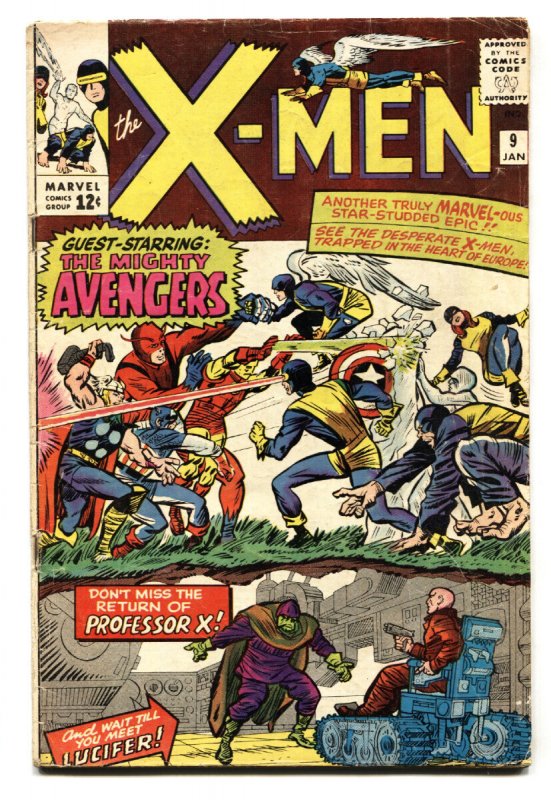
  • X-Men #9 (January 1965) — first meeting of the X-Men and Avengers; first Lucifer. In the store.
  • X-Men #12 (July 1965) — first Juggernaut.
  • X-Men #14 (November 1965) — first Sentinels.

The 1975 relaunch

Giant-Size X-Men #1 (May 1975) and X-Men #94 (August 1975) introduced the new team — Storm, Nightcrawler, Colossus, Thunderbird, with Wolverine — and began the Claremont era that made the X-Men Marvel's best-selling franchise. See Giant-Size X-Men #1 vs X-Men #94 and First appearance of Storm.

Collecting X-Men #1

A top Silver Age key, scarce in high grade and often restored. Low-grade copies are still valuable because the demand is deep. Reprints include Marvel Milestone Edition (1991) and facsimiles.

The X-Men character page lists everything current.

Written by the Rare Comics Collectors grading team. Spotted an error or have a question this guide does not answer? Tell us.

In the vault right now

Browse all listings →
X-Men #1 (Marvel Comics, 1963), CGC 9.0 graded comic book, Universal Blue label — front cover in its holder
MarvelCGC

X-Men

#1 · 1963

9.0
Key issueLast copy

Marvel Comics · Silver Age

X-Men #1

CGC 9.0 · Universal Blue

(7)
$225,000
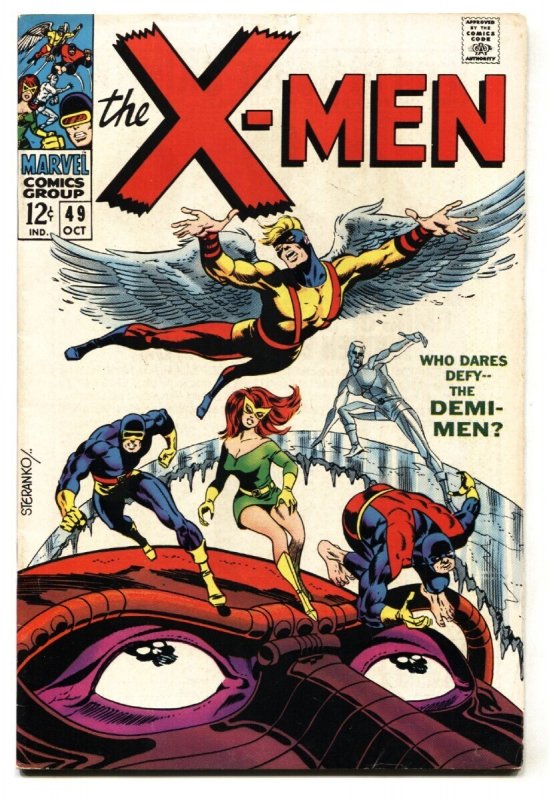
X-Men #49 (Marvel Comics, 1996), raw, ungraded comic book — front cover
MarvelRaw

X-Men

#49 · 1996

Not graded
Key issueLast copy

Marvel Comics · Modern Age

X-Men #49

Raw · Not graded

(0)
$562.50
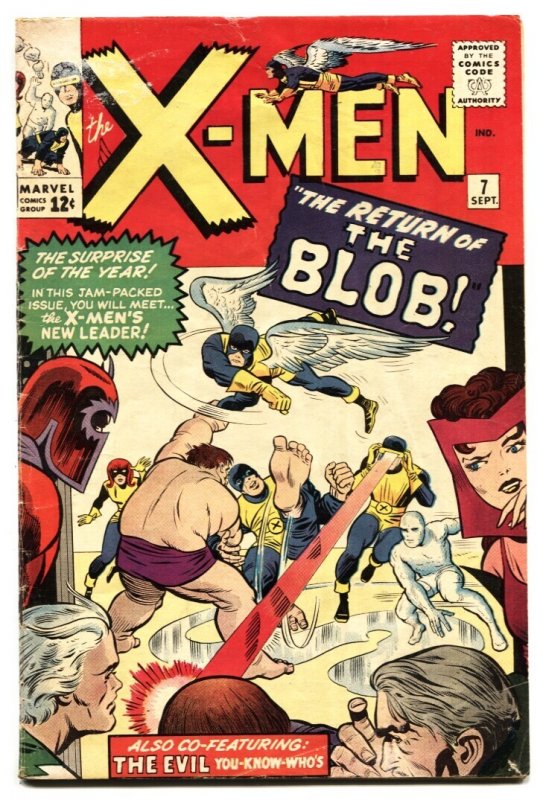
X-Men #7 (Marvel Comics, 1964), raw comic book in VG condition — front cover
MarvelRaw

X-Men

#7 · 1964

VG
Last copy

Marvel Comics · Silver Age

X-Men #7

Raw · VG

(0)
$562.50
X-Men #9 (Marvel Comics, 1965), raw, ungraded comic book — front cover
MarvelRaw

X-Men

#9 · 1965

Not graded
Key issueLast copy

Marvel Comics · Silver Age

X-Men #9

Raw · Not graded

(0)
$506.25
  • Key issues

    X-Men Comic Books: The Key Issues and What Grade Does to Them

    The first X-Men comic is The X-Men #1, cover-dated September 1963, from Marvel Comics by Stan Lee and Jack Kirby. The books collectors chase most are that issue, Giant-Size X-Men #1 (1975), X-Men #94, #101 and #129, and on all of them the CGC or CBCS grade is the largest driver of price.

    Updated Oct 11, 2026

  • Collecting

    What are the ages of comic books? Golden, Silver, Bronze, Copper and Modern explained

    Collectors divide American comics into eras: the Golden Age (1938 to the mid-1950s), the Silver Age (1956 to about 1970), the Bronze Age (about 1970 to 1985), the Copper Age (about 1985 to 1991) and the Modern Age (1991 to today). The boundaries are conventions rather than official dates, but each era has its own print runs, survival rates, paper and pricing, which is why listings and price guides always state one.

    Updated Oct 11, 2026

  • Collecting

    What is a key issue in comics?

    A key issue is a comic that matters for a reason beyond its story: the first appearance of a character, an origin, a first issue, a death, a famous cover, a creator's debut, or the first appearance of a costume or team. Keys are the books that hold and grow value because demand is tied to the character or event rather than to the issue's rarity alone.

    Updated Oct 10, 2026

  • Collecting

    First appearance vs cameo: what is the difference?

    A cameo is a brief appearance — often a single panel, a shadowed figure, or a last-page teaser — while a first full appearance is the issue in which the character plays a real part in the story. The market usually prices the first full appearance higher, but when the cameo is the first time the character is seen at all, both issues become keys. Incredible Hulk #180 (cameo) and #181 (first full appearance) for Wolverine is the classic example.

    Updated Oct 10, 2026

  • News

    The most expensive comic books ever sold: documented record sales

    The record for a single comic is 6 million dollars, paid for a CGC 8.5 copy of Action Comics #1 (1938) at Heritage Auctions in April 2024. Other documented milestone sales include a CGC 7.0 Superman #1 at 5.3 million dollars (private sale, 2022), a CGC 9.6 Amazing Fantasy #15 at 3.6 million dollars (Heritage, September 2021), a CGC 8.5 Action Comics #1 at 3.25 million dollars (ComicConnect, April 2021) and a CGC 9.4 Captain America Comics #1 at 3.12 million dollars (Heritage, April 2022).

    Updated Oct 11, 2026

  • Characters

    What is the first appearance of Superman?

    Superman first appeared in Action Comics #1, cover-dated June 1938 and on sale in April 1938, created by writer Jerry Siegel and artist Joe Shuster and published by Detective Comics, Inc., the company that became DC Comics. It is the first superhero comic and the most valuable comic book in the world: a CGC 8.5 copy sold for 6 million dollars in April 2024.

    Updated Oct 11, 2026