Ghost Rider Comics: Key Issues and What Graders Look For
Published Oct 10, 2026 · Updated Oct 11, 2026 · 3 min read
Short answerThe key Ghost Rider comic is Marvel Spotlight #5 (August 1972), the first appearance of Johnny Blaze as Ghost Rider. Ghost Rider #1 (September 1973) followed it, and for either book the third-party grade is one of the biggest factors in what a copy sells for.
The book at the top of the list
Marvel Spotlight #5, cover-dated August 1972, is the first appearance of Ghost Rider as Johnny Blaze. Roy Thomas, Gary Friedrich and Mike Ploog created the character, and the story of a stunt rider who sells his soul to save his mentor and becomes a flaming-skulled spirit of vengeance proved an immediate success. The full details are in the guide to the first appearance of Ghost Rider.
The date explains the character. The Comics Code's 1971 revision allowed vampires, werewolves and ghouls back into comics when handled in the tradition of classic literature, and Marvel answered with a horror line that included Werewolf by Night, Tomb of Dracula and then Ghost Rider. The background is covered in how the 1971 Code change created Marvel's horror books.
One name, more than one Ghost Rider
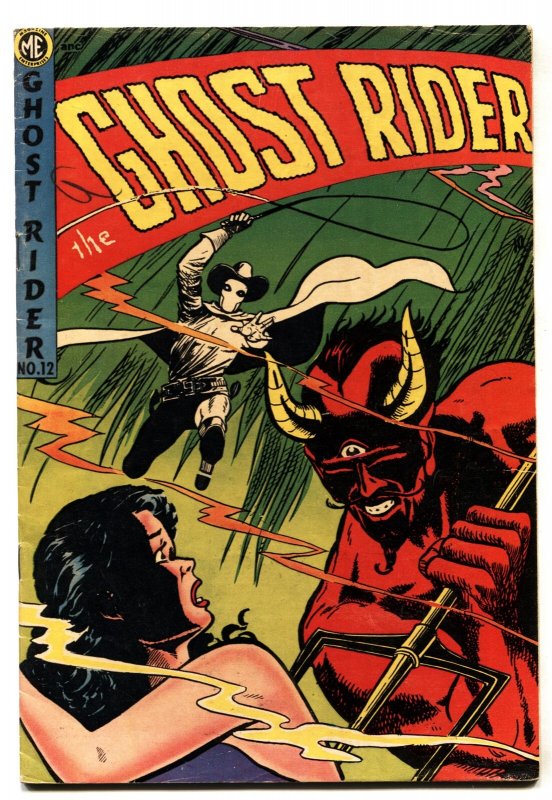
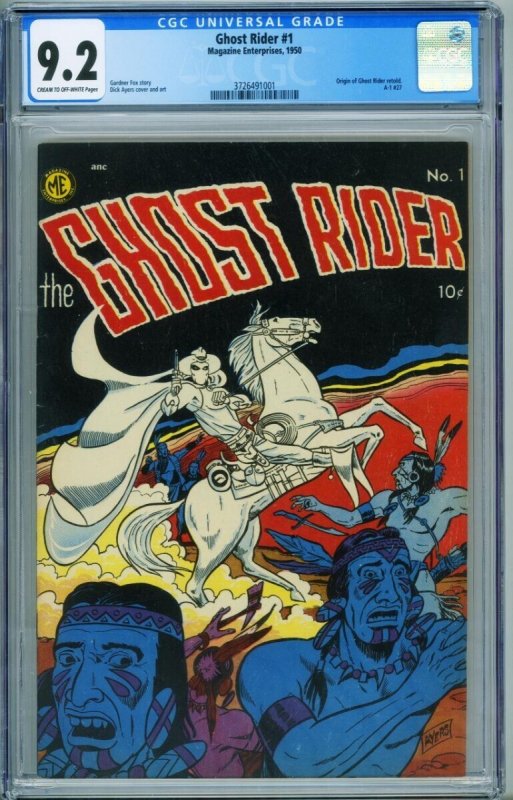
Anyone searching for the first Ghost Rider needs to know the name was used before. An earlier, unrelated Western character called Ghost Rider appeared at Magazine Enterprises in 1949 and at Marvel in 1967. Those books are a separate collecting area from the Johnny Blaze character, and the 1972 issue is the one the market treats as the key.
The books collectors look for
- Marvel Spotlight #5 (August 1972): the first appearance and the central book of the character's collecting history.
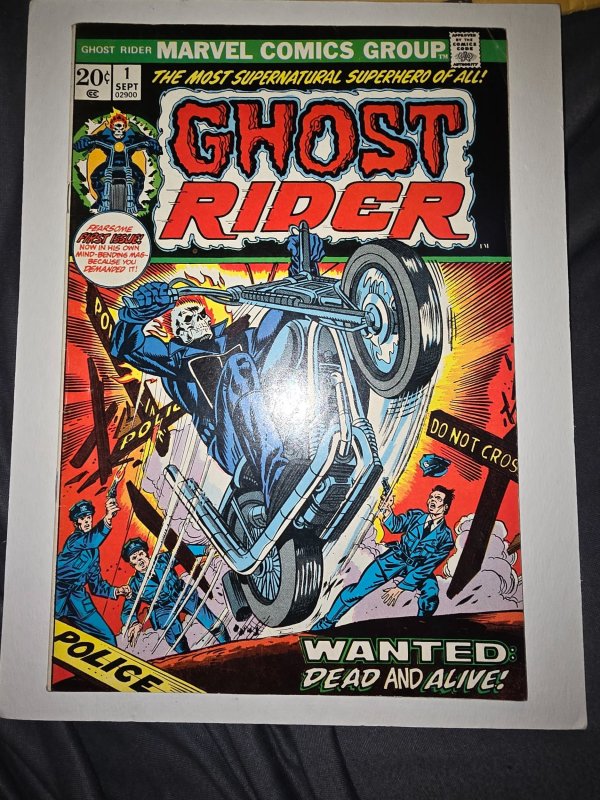
- Ghost Rider #1 (September 1973): the first issue of the character's own series, launched about a year after his debut.
- Early issues of the 1973 series: copies such as Ghost Rider #2 in CGC 9.0 are listed for sale.
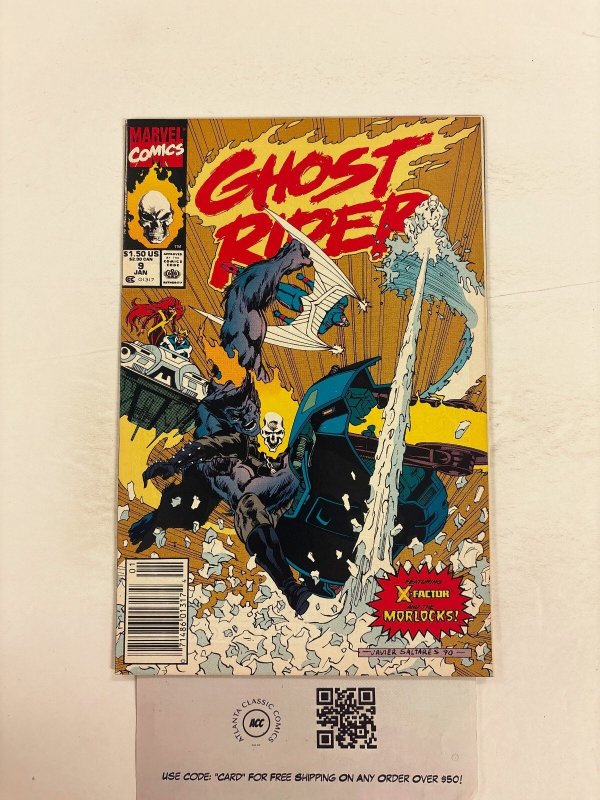
- Later issues in high grade: the run continued for many years, and high-grade copies of later numbers such as #35, #36, #46, #70 and #79 are listed for sale.
A complete overview of the character, with key issues and current listings, is on the Ghost Rider character page.
What CGC and CBCS look at on a Ghost Rider book
CGC and CBCS are third-party grading companies. Both grade on a 0.5 to 10.0 scale and seal the book in a tamper-evident holder. The scale itself is explained elsewhere on the site; what matters here is how it plays out on Bronze Age Marvel books like these.
- Cover condition: Bronze Age Marvel covers show corner wear, spine stress lines, color-breaking creases and edge chipping, and Ghost Rider's dark, saturated covers can make surface scuffs easy to see.
- Spine: every fold along the spine is counted, and stress lines are one of the most common reasons a copy lands below the grade a seller hoped for.
- Restoration: a trimmed edge, color touch-up or added glue can move a book into a restored category, which is priced very differently from an unrestored copy.
- Completeness: a missing coupon, cut or clipped page or a detached cover limits the grade no matter how good the rest looks.
How grade changes the price
Between two otherwise identical copies, the one with the higher grade and cleaner label usually commands more, and the gap tends to widen at the top of the scale. The size of that gap on any given issue changes with the market, so no single figure is reliable. Check recent sold prices for the exact issue and grade from auction houses and marketplaces rather than relying on a price guide.
An ungraded copy can still be worth owning, but its condition is the seller's opinion rather than an independent one. If you hold a raw Marvel Spotlight #5 or Ghost Rider #1, the grading submission service can submit it to CGC or CBCS, and the appraisal and valuation service can help you decide whether a copy is worth grading first. Listed graded copies are on the store.
For more on how to approach older Marvel keys, the collector guides cover the surrounding history.
Frequently asked
- When was Ghost Rider made?
- The Johnny Blaze Ghost Rider first appeared in Marvel Spotlight #5, cover-dated August 1972. His own series, Ghost Rider #1, followed in September 1973. An unrelated Western character with the same name appeared in 1949 at Magazine Enterprises.
- What is the first Ghost Rider comic?
- For the flaming-skulled Johnny Blaze version, it is Marvel Spotlight #5 (August 1972), created by Roy Thomas, Gary Friedrich and Mike Ploog. Earlier Western characters named Ghost Rider are a different property.
- Does a Ghost Rider comic need to be CGC graded?
- No, but a CGC or CBCS grade gives buyers an independent opinion of condition and seals the book in a protective holder. For key issues like Marvel Spotlight #5 that assurance is a large part of how copies are priced and sold.
Drafted with AI assistance from the facts and keywords the Rare Comics Collectors team maintains, then put through an automated fact check and our editorial rules. Spotted an error or have a question this guide does not answer? Tell us.